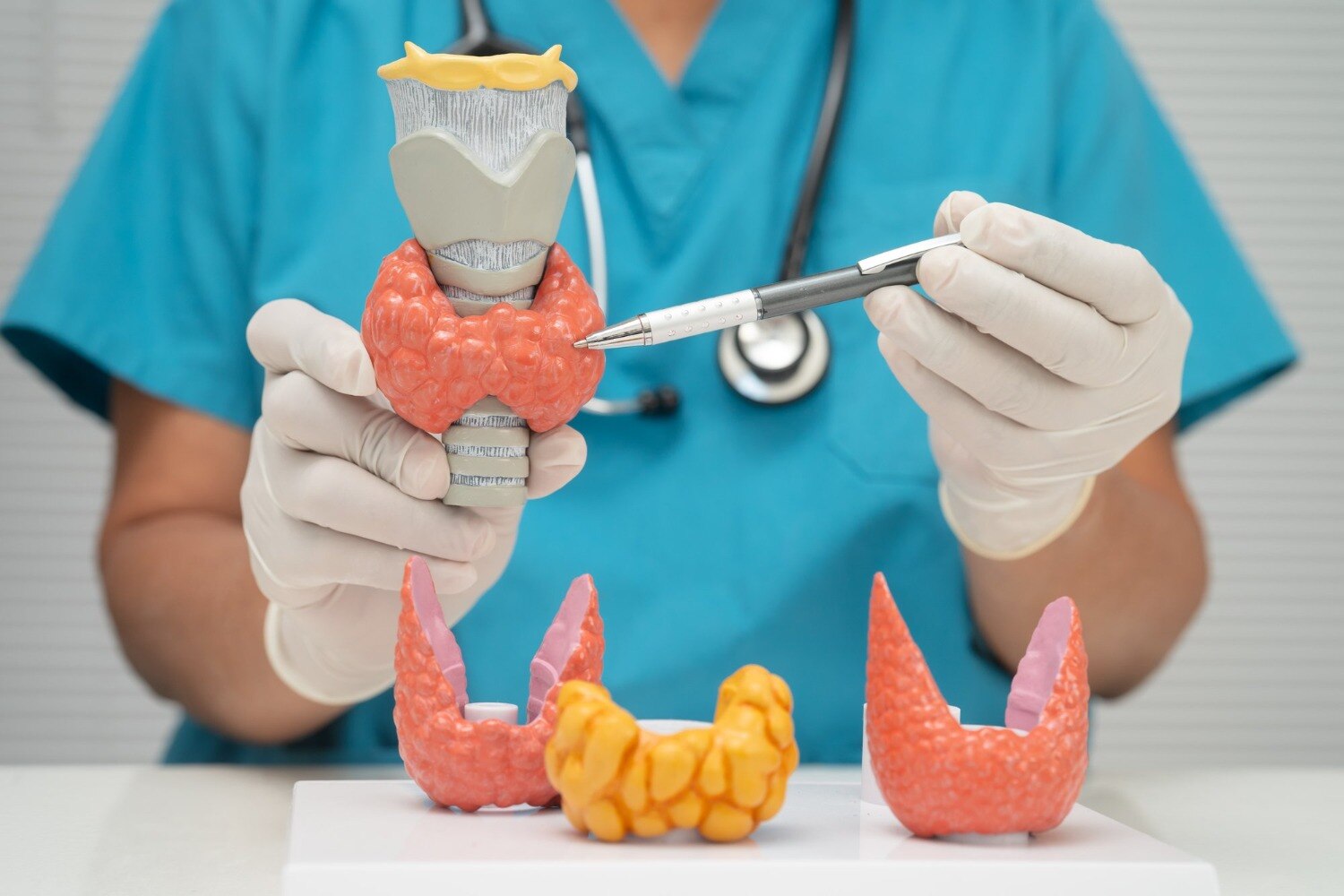
A thyroid nodule, cyst, goitre or small thyroid cancer does not automatically require an operation. The right choice depends on ultrasound features, biopsy findings, symptoms, thyroid function, cancer risk and whether you can complete reliable follow-up. By the end, you will know what to ask before choosing observation, lobectomy, total thyroidectomy or another treatment.
Key takeaways
- TSH measures hormone production, not whether a thyroid nodule is cancerous.
- Use ultrasound risk features and fine-needle aspiration to guide the decision.
- Observation fits selected nodules when follow-up scans and clinical reviews are reliable.
- Ask whether lobectomy or total thyroidectomy is justified for your finding.
What the Finding and Your Thyroid Function Actually Mean
A normal or abnormal TSH does not decide whether a thyroid operation is needed. TSH shows how well the gland is producing hormone; it does not reveal whether a nodule is cancerous or compressing the airway. Most hypothyroidism, including uncomplicated Hashimoto disease, uses levothyroxine rather than thyroidectomy.
Thyroid surgery versus observation depends on the finding, its symptoms, ultrasound appearance, biopsy result, growth, lymph nodes, age and pregnancy plans. Observation means scheduled examination and ultrasound, not ignoring the problem. It is suitable only when you can complete follow-up; distance, appointment access and repeat testing matter for Mumbai patients.
| Finding | Observation | When surgery becomes reasonable |
|---|---|---|
| Benign small nodule or cyst | Ultrasound follow-up if stable and symptom-free | Growth, pressure, repeated fluid recurrence or concerning reassessment |
| Multinodular goitre | Monitor when hormone levels and breathing or swallowing are unaffected | Airway or swallowing pressure, substernal extension or suspicious nodule |
| Graves’ disease or toxic nodule | Medicines or radioactive iodine may control excess hormone | Persistent disease, medication problems, compression or a selected toxic nodule |
| Low-risk thyroid cancer | Active surveillance can suit selected very small cancers | Enlargement, invasive features, suspicious lymph nodes or higher-risk biopsy |
| Suspicious or malignant nodule | Observation is unsafe when cancer risk is established | Remove the involved lobe or gland according to the cancer’s extent |
Thyroid surgery can provide a complete specimen diagnosis and remove a malignant or compressive lesion, but it is not a general cure for low thyroid function. Discuss thyroid treatment options in Mumbai according to the actual diagnosis, not the TSH result alone.
How Ultrasound and Fine-Needle Aspiration Change the Decision
Doctors decide among monitoring, fine-needle aspiration (FNA) and surgery by combining ultrasound appearance, nodule size, growth, symptoms, lymph-node findings and cytology—not by TSH alone. A normal TSH does not make a suspicious nodule safe, while an abnormal TSH does not automatically require thyroidectomy.
Ultrasound reports often use ACR TI-RADS to classify risk and set size-based thresholds for follow-up or biopsy. Concern rises with a solid nodule, irregular margins, microcalcifications, a taller-than-wide shape, extension beyond the thyroid or suspicious neck lymph nodes.
A cyst with benign features may only need observation; rapid enlargement or pressure on the airway changes that assessment.
- Monitor when the nodule is small, low-risk on TI-RADS and causes no swallowing or breathing symptoms. Monitoring means planned examinations and repeat ultrasound, not ignoring it.
- Perform FNA when the nodule reaches the guideline threshold for its ultrasound-risk category, grows significantly, or has concerning lymph nodes.
- Interpret the FNA using Bethesda categories. Benign cytology usually supports surveillance; indeterminate results may require repeat FNA, molecular testing or diagnostic lobectomy; suspicious or malignant results commonly lead to surgery.
- Prefer surgical review when the lesion is rapidly enlarging, compressive, linked to suspicious lymph nodes or cannot be followed reliably.
The thyroid surgery vs observation benefits in Mumbai depend on whether you can complete scheduled imaging and review appointments. Surgery becomes more compelling when cancer is suspected or follow-up access is uncertain; observation remains reasonable when risk is low and surveillance is dependable.
When Observation, Active Surveillance or Non-Surgical Treatment Fits
Monitoring is safer than surgery when a nodule lacks biopsy or ultrasound features that suggest cancer, causes no pressure symptoms, and thyroid function remains manageable. Observation means scheduled examination and repeat ultrasound, not ignoring the finding. Growth or new suspicious features can lead to repeat fine-needle aspiration or surgery.
For selected low-risk papillary microcarcinomas, active surveillance avoids an operation while the tumour remains small and confined to the thyroid.
Long-term Japanese cohorts found at least 3 mm of growth in roughly 8% over 10 years and new lymph-node metastasis in about 4%; these figures apply to carefully selected patients, not every thyroid cancer or every Indian patient.
| Option | What it does | When it fits |
|---|---|---|
| Thyroid-hormone replacement | Replaces missing hormone | Hypothyroidism, including uncomplicated Hashimoto disease |
| Antithyroid medicine | Reduces hormone production | Initial treatment or stabilisation of Graves’ disease and selected toxic nodules |
| Radioactive iodine | Destroys functioning thyroid tissue | Hyperthyroidism or selected thyroid cancers after surgery when recurrence risk or residual disease justifies it |
| Thermal ablation | Shrinks a proven benign solid nodule | Pressure or cosmetic symptoms when avoiding surgery is important |
Ablation, including laser ablation, does not provide a complete specimen and is inappropriate when malignancy is proven or strongly suspected. Among thyroid treatment options in Mumbai, the choice depends on symptoms, growth, lymph nodes, pregnancy plans, thyroid function and cancer risk; TSH alone cannot decide it.
Thyroidectomy Benefits, Surgical Risks and Extent of Removal
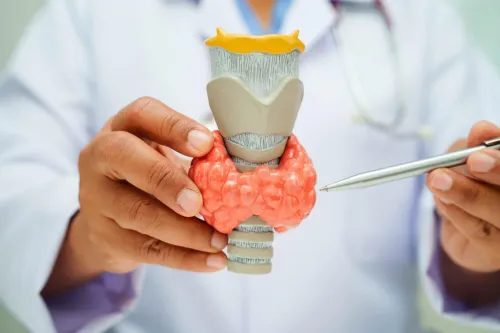
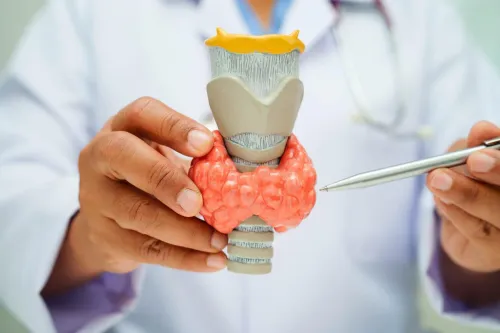
Lobectomy removes one thyroid lobe; total thyroidectomy removes both. For differentiated thyroid cancer confined to one lobe, without invasion, involved lymph nodes or distant spread, lobectomy is often sufficient for tumours 4 cm or smaller. Larger tumours, extension beyond the thyroid, metastatic nodes or distant metastases favour considering total thyroidectomy.
| Option | What it achieves | Main trade-off |
|---|---|---|
| Lobectomy | Removes the affected lobe, provides a complete specimen for diagnosis and ends surveillance of that lobe | The remaining lobe may not produce enough hormone; TSH monitoring remains necessary |
| Total thyroidectomy | Removes all thyroid tissue and may simplify radioactive iodine treatment or monitoring when cancer risk warrants it | Permanent levothyroxine replacement and greater exposure to nerve and parathyroid complications |
The main thyroidectomy benefits are immediate removal of a malignant or compressive lesion, a definitive specimen, and no further surveillance of the treated lobe. Surgery does not automatically improve life expectancy when a very low-risk microcarcinoma could safely remain under observation.
Weigh these risks before choosing thyroid surgery or observation:
- Bleeding requiring urgent treatment
- Injury to the recurrent laryngeal nerve, causing voice change
- Low calcium from parathyroid injury; after total thyroidectomy, this can become permanent
- Hypothyroidism after lobectomy, especially with a high preoperative TSH or thyroid antibodies
Total thyroidectomy is not automatically better because it avoids possible future surgery. If high-risk pathology appears after lobectomy, completion surgery can be discussed. Radioactive iodine is selective after surgery, not a routine replacement for the initial operation.
Thyroid surgery or observation must also be distinguished from laser or other thermal ablation, which does not provide a complete specimen and is unsuitable when cancer is proven or strongly suspected.
How Mumbai Patients Can Turn the Decision Into a Safe Plan
Ask the surgeon to turn your result into a dated plan, not a vague choice. Your TSH alone cannot decide it: ask how the ultrasound features, ACR TI-RADS category, nodule size and growth, Bethesda biopsy result, symptoms, lymph nodes, age and pregnancy plans change the recommendation.
| Option | What it means | When it applies |
|---|---|---|
| Observation | Repeat ultrasound, examination and any indicated biopsy | A low-risk lesion with reliable follow-up and no pressure symptoms |
| Lobectomy | Remove one thyroid lobe | A unilateral, low-risk nodule or cancer where one-sided treatment is adequate |
| Total thyroidectomy | Remove both lobes, followed by lifelong hormone replacement | Selected cancers, disease on both sides or specific high-risk findings |
Ask these questions before consenting:
- What exact finding makes you recommend observation or surgery, and what result would change that plan?
- When is my next ultrasound, who reviews it, and what growth or new feature triggers biopsy or treatment?
- Can I reliably reach the clinic for surveillance from my Mumbai location?
- What are your own annual thyroid operation numbers and permanent rates of nerve injury, low calcium and reoperation?
- If cancer is suspected, why is radioactive iodine being considered, and why is it not a substitute for the initial operation?
- Would a standard neck incision provide safer treatment than a remote-access approach for me?
Dr.VinayKumar Thati-Laser & Laparoscopic Surgeon should be assessed by these decision details, not by the label “laser” or “laparoscopic,” because routine laser or laparoscopic thyroid removal is not standard cancer surgery. This is the practical thyroid surgery vs observation benefits in Mumbai: the safer option is the one you can complete and follow.
Related service
GI SURGERY Thyroid Thyroidectomy is the surgical removal of all or part of your thyroid gland. |
Frequently asked questions
Does an abnormal TSH mean I need thyroid surgery?
No. TSH shows how well the thyroid produces hormone, but it does not determine whether a nodule is cancerous or compressing the airway. Uncomplicated hypothyroidism, including Hashimoto disease, usually uses levothyroxine rather than thyroidectomy.
How do ultrasound and fine-needle aspiration affect the decision?
Ultrasound assesses the nodule’s structure and risk features. Fine-needle aspiration examines sampled cells when the nodule meets the relevant size and appearance criteria. Their results help compare surgery with observation or other treatment.
When can observation or active surveillance be appropriate?
Observation or active surveillance can fit selected thyroid nodules when assessment shows low risk, symptoms are absent or manageable, and you can attend scheduled reviews and repeat imaging.
What are the benefits and risks of thyroidectomy?
Thyroidectomy can remove a cancerous, suspicious or compressive thyroid lesion and treat selected hormone-producing nodules. Risks include bleeding, infection, voice-related nerve injury and low calcium; the extent of surgery affects the need for lifelong thyroid hormone.
Keywords