The right treatment depends on whether the appendix is uncomplicated, perforated, gangrenous or surrounded by an abscess, not simply on whether a clinic advertises keyhole or laser surgery. By comparing surgery, antibiotics, imaging findings and personal health factors, you can ask better questions and know when emergency care matters more than an elective consultation.
Key takeaways
- Seek emergency assessment for worsening pain, fever, vomiting or a rigid abdomen.
- Laparoscopy often means smaller incisions; open surgery may fit rupture or complex infection.
- Antibiotics or drainage require careful selection and follow-up for selected patients.
- Ask about imaging, rupture, surgical approach, risks, recovery and backup plans.
When symptoms require emergency assessment and how appendicitis is confirmed
Worsening right-lower-abdominal pain needs emergency assessment, not a routine consultation about “which appendix surgery is right for me in mumbai” when it occurs with:
- Fever
- Repeated vomiting or inability to keep fluids down
- Rigid, intensely tender abdominal muscles
- Fainting or confusion
Doctors assess appendicitis through your history and examination, checking tenderness, guarding, rigidity, dehydration and vital signs. Blood tests include a complete blood count for raised white cells and inflammatory markers such as C-reactive protein. Urine testing helps identify a urinary infection or blood from a kidney stone, which can mimic appendicitis.
Ultrasound avoids radiation but can be inconclusive, particularly in adults or when bowel gas obscures the appendix. If concern remains, CT usually provides greater diagnostic accuracy, with ionising radiation as its trade-off. MRI provides a radiation-free alternative when available, especially during pregnancy.
Imaging can show uncomplicated inflammation or an appendicolith, a hard deposit linked to treatment failure. It can also reveal gangrene, perforation, an abscess or peritonitis, each requiring a different urgency and treatment plan.
A stable patient with uncomplicated appendicitis may undergo appendectomy within 24 hours of admission rather than immediately overnight; that short, monitored delay is different from leaving worsening disease untreated.
Laparoscopic or open appendectomy: which operation fits the findings?
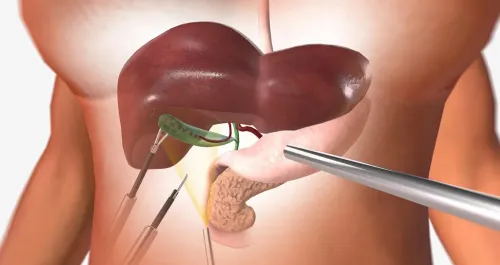
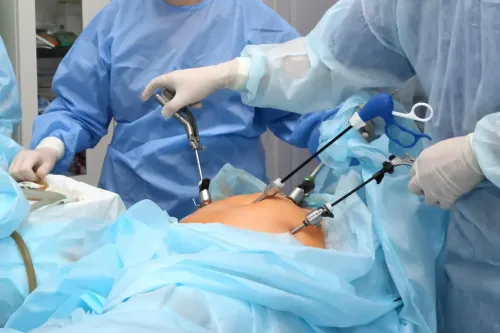
For most adults, the laparoscopic appendix surgery choice is laparoscopic appendectomy when suitable expertise and equipment are available. Under general anaesthesia, the surgeon uses a camera and instruments through several small ports. Open appendectomy uses one larger incision, usually in the lower right abdomen, to reach the appendix directly.
| Feature | Laparoscopic appendectomy | Open appendectomy |
|---|---|---|
| Access | Camera and instruments through small ports | One larger incision |
| Pain and wounds | Usually less pain and fewer wound infections | Larger wound can cause more pain and wound-care needs |
| Hospital stay | Often shorter, but not automatically same-day | Often longer when inflammation or complications are present |
| Activity | Usually faster return to normal activity | Recovery can take longer |
The surgeon removes the appendix in either operation and sends it to a laboratory for pathology testing. Hospital discharge depends on stable vital signs, controlled pain and nausea, ability to drink and walk, and the absence of complications.
Severe inflammation, perforation, dense adhesions, bleeding, unusual anatomy or poor visibility can make open surgery safer. The surgeon may begin laparoscopically and convert to an open operation; conversion is a safety decision, not automatically a complication.
“Laser appendectomy” is not a standard operation in major appendicitis guidance. Ask whether the clinic’s laser wording means laparoscopy or refers to another procedure before comparing appendix surgery options in Mumbai.
When antibiotics, drainage or observation can replace immediate surgery
Antibiotics without immediate appendectomy are reasonable only for a carefully selected patient with imaging-confirmed uncomplicated appendicitis, no appendicolith, no perforation or abscess, and dependable follow-up. Observation is not casual waiting: it requires clinical reassessment and a clear plan to operate if pain, fever or examination findings worsen.
| Option | What it involves | When it applies |
|---|---|---|
| Antibiotics only | Antibiotics, monitoring and planned follow-up | Uncomplicated disease without an appendicolith |
| Abscess treatment | Antibiotics, with image-guided drainage when appropriate | Abscess or inflammatory mass |
| Immediate surgery | Appendectomy after assessing operative risk | Perforation, diffuse peritonitis, deterioration or unsuitable anatomy |
You accept a real chance of recurrence or later surgery by choosing antibiotics. In the CODA trial, 29% of patients assigned to antibiotics had undergone appendectomy by 90 days; patients with an appendicolith had greater complication and appendectomy risks. The APPAC five-year follow-up found a 39.1% cumulative incidence of appendectomy after initial antibiotics.
An abscess or inflammatory mass is usually treated with antibiotics, drainage when a drain can be placed safely, and a later individualised decision about appendectomy. Routine interval appendectomy is not required for every young adult who recovers, because many avoid another operation.
Adults aged 40 or older need follow-up with colon evaluation, often colonoscopy, and contrast-enhanced CT to investigate an occult appendiceal or colonic tumour.
How age, pregnancy and other health conditions change the choice
Age, pregnancy and existing illnesses can change the safest operation, imaging sequence and discharge plan. Children need weight-based assessment and medication planning; older adults need attention to atypical symptoms, frailty and other diseases; pregnant patients need coordinated surgical, obstetric and anaesthesia assessment.
| Factor | What can change | Practical planning |
|---|---|---|
| Children | Symptoms, examination and drug doses vary with age and weight | Use paediatric assessment and age-appropriate imaging |
| Pregnancy | Ultrasound may be inconclusive; anaesthesia and positioning require adaptation | Obtain MRI after an inconclusive ultrasound when available without harmful delay; do not casually observe suspected appendicitis when appendectomy is indicated |
| Obesity | Abdominal wall thickness can make port placement and instrument access harder | Discuss access, equipment and the possibility of an open approach |
| Previous abdominal surgery or dense adhesions | Scar tissue can obscure anatomy and increase access difficulty | Allow extra operative time and convert to open surgery if that is safer |
| Bleeding disorder or serious heart or lung disease | Surgery and general anaesthesia carry additional risks | Arrange specialist review, medication planning and formal anaesthesia assessment |
Pregnancy changes planning, not the need to treat confirmed appendicitis promptly. An experienced team can perform laparoscopic appendectomy during pregnancy when indicated.
Same-day or next-day discharge fits only uncomplicated disease with stable vital signs, controlled pain and nausea, and the ability to drink and walk. You also need wound-review arrangements and clear instructions to return for fever, worsening pain, vomiting, faintness or breathing difficulty.
What to ask at an appendectomy consultation in Mumbai
Compare evidence and safety arrangements, not “laser” or “keyhole” wording. An appendectomy consultation in Mumbai should give you clear answers about diagnosis, access and total cost.
| Approach | Access and recovery | When the choice changes |
|---|---|---|
| Laparoscopic appendectomy | Camera and instruments through small ports under general anaesthesia; often less pain, fewer wound problems and quicker recovery | Suitable when visibility and inflammation allow safe minimally invasive surgery |
| Open appendectomy | One larger incision with direct access; recovery can take longer | Safer when perforation, dense adhesions, bleeding, unusual anatomy or poor visibility prevents safe laparoscopy |
Ask these questions:
- What is the working diagnosis, and does imaging show uncomplicated or complicated disease?
- Why do you recommend laparoscopy or open surgery for me?
- Is antibiotic-only treatment suitable, given the scan findings, appendicolith, perforation or abscess and my ability to attend follow-up?
- What is the likelihood of conversion to open surgery? Conversion is a safety decision, not automatically a complication.
- How long might admission last?
- Does the estimate include the surgeon, anaesthesia, operating theatre, pathology, medicines, imaging and treatment of possible complications?
If you search for an appendix surgeon near me, check the doctor’s registration in the National Medical Commission Indian Medical Register. Confirm that the facility provides emergency assessment, an operating theatre, anaesthesia cover, imaging, pathology and postoperative monitoring.
Dr.VinayKumar Thati-Laser & Laparoscopic Surgeon can support this decision through a consultation focused on your diagnosis, operative approach and individual risk rather than a procedure label.
Related service
LAPAROSCOPIC SURGERY Appendix The appendix is a small, finger-shaped organ that comes out of the first part of the large intestine. |
Frequently asked questions
How is appendicitis confirmed before surgery?
Doctors combine your symptoms and abdominal examination with blood tests and imaging such as ultrasound or CT when needed. The findings also show whether the appendix has ruptured or formed an abscess.
When is laparoscopic appendectomy suitable?
Laparoscopic surgery uses small abdominal incisions and often suits uncomplicated appendicitis. The surgeon may recommend open surgery when rupture, extensive infection, difficult anatomy or previous operations make laparoscopy unsuitable.
Can antibiotics or drainage replace immediate appendectomy?
Selected patients with uncomplicated appendicitis may discuss antibiotics instead of immediate surgery. An abscess may first require antibiotics and image-guided drainage, followed by reassessment and a plan for recurrence or persistent disease.
What should you ask during an appendectomy consultation in Mumbai?
Ask which findings support the diagnosis, whether the appendix has ruptured, which approach is recommended, what happens if the operation changes to open surgery, expected recovery, warning signs and follow-up arrangements.
Keywords