Choosing between laparoscopic and open gallbladder surgery depends on the condition of the gallbladder, the surrounding anatomy and your overall surgical risk—not just the size of the incision. You will learn how each operation works, when doctors recommend surgery, why conversion can be the safest choice and what to compare before consenting in Mumbai.
Key takeaways
- Both procedures usually remove the entire gallbladder, not individual stones.
- Laparoscopy usually means smaller incisions and faster recovery than open surgery.
- Open surgery or conversion can be safer with severe inflammation or difficult anatomy.
- Compare a surgeon’s experience, hospital facilities, recovery plan and conversion policy.
How do laparoscopic and open cholecystectomy differ?
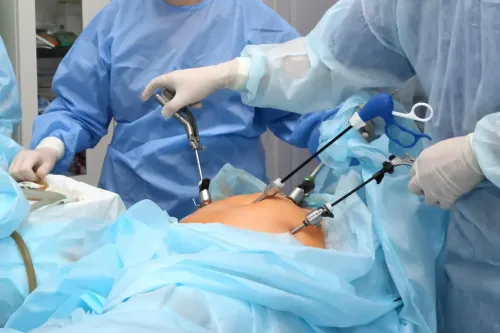
Laparoscopic and open cholecystectomy both usually remove the entire gallbladder under general anaesthesia, not individual stones. The main difference is access: laparoscopy uses a camera and instruments through several small abdominal incisions after carbon dioxide creates working space, while open surgery uses one larger incision under the ribs or across the upper abdomen.
| Option | Surgical access and incision | Stay, pain and recovery |
|---|---|---|
| Laparoscopic cholecystectomy | Camera and instruments through several small abdominal cuts | Uncomplicated cases may discharge the same day or after a short admission; less wound discomfort, smaller scars, earlier walking and faster return to routine activity |
| Open cholecystectomy | Direct access through one larger upper-abdominal incision | Usually needs longer monitoring, causes more incision discomfort and leaves a larger scar; recovery takes longer |
| Both approaches | Gallbladder removal under general anaesthesia | Risks include bleeding, infection, bile leak, retained bile-duct stones, anaesthetic problems and bile-duct injury |
This open vs laparoscopic cholecystectomy comparison favours laparoscopy for uncomplicated cases, but a smaller incision does not remove the risks of major surgery. Discharge depends on pain and nausea control, walking, drinking, vital signs, other illnesses and the operation’s complexity.
During laparoscopic gallbladder surgery vs open surgery in Mumbai, severe inflammation, dense adhesions, uncontrolled bleeding or unclear anatomy can make an open operation safer. Open surgery is not automatically inferior when it provides safer access and reduces the chance of bile-duct injury.
What happens during laparoscopic gallbladder surgery?
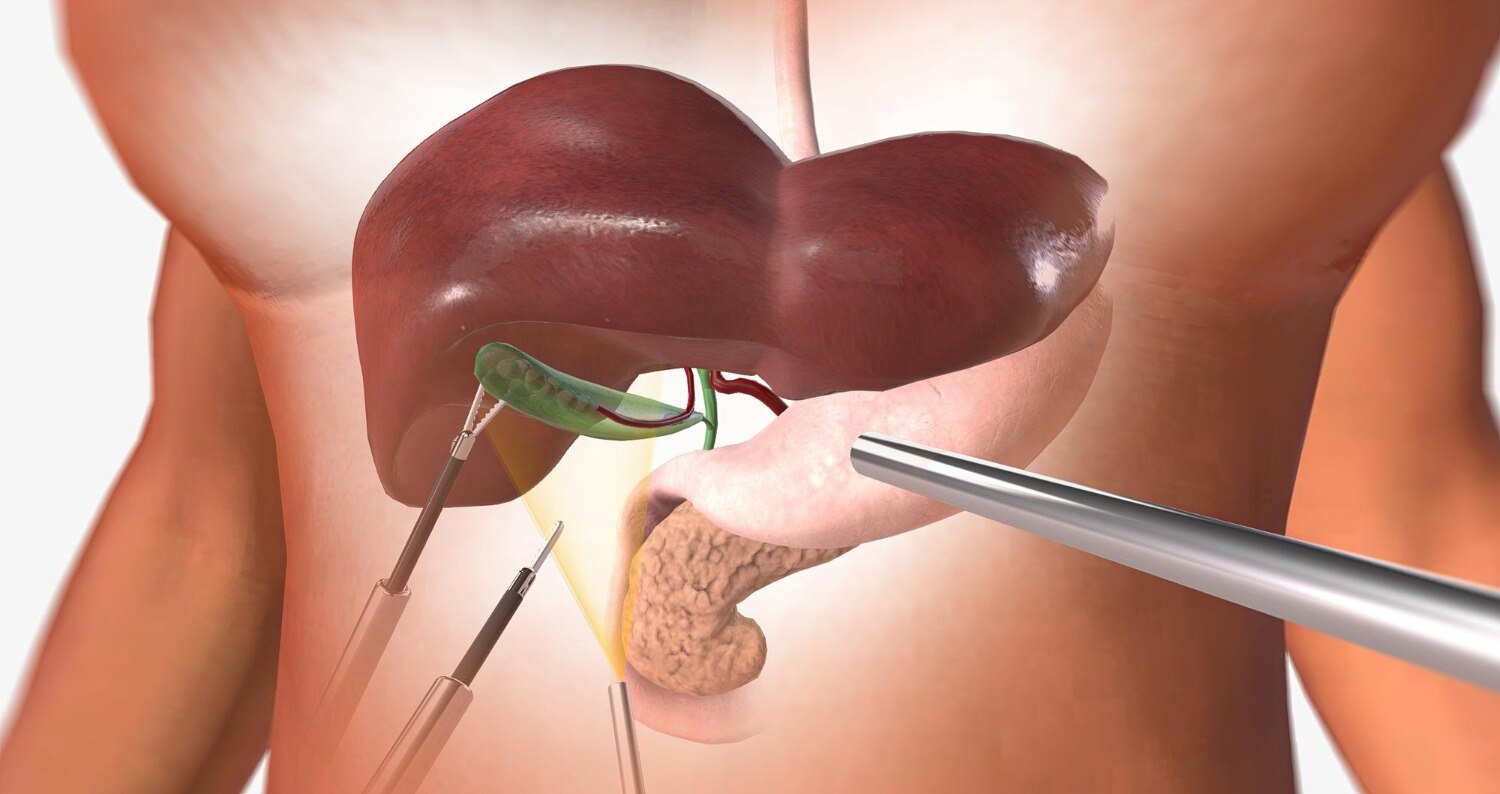
The operation uses general anaesthesia and usually three or four small ports. One port sits near the navel for the camera; additional ports in the upper abdomen hold graspers, a dissector and a clip applicator. Exact placement varies with your anatomy and the surgeon’s approach.
The surgeon exposes the gallbladder neck and identifies the cystic duct and cystic artery. Neither is clipped or divided until the critical view of safety confirms the anatomy. The surgeon then separates the gallbladder from the liver and removes it through a port. The specimen is sent for pathology when indicated.
The main laparoscopic gallbladder surgery benefits are smaller scars, reduced wound discomfort, earlier mobilisation and a quicker return to light activity than open surgery. Laparoscopic cholecystectomy recovery still takes time: nausea, shoulder-tip discomfort from the gas, fatigue, bloating, loose stools or other altered bowel habits can occur. Avoid heavy lifting until the surgeon clears you.
Seek prompt review for persistent or worsening pain, fever, jaundice, vomiting or increasing redness around a wound. These symptoms can signal infection, bleeding, bile leakage or another complication rather than routine recovery.
When is surgery needed, and which gallbladder stone options apply?
Gallstones do not automatically mean an operation. Stones found incidentally on ultrasound without pain often need observation, not cholecystectomy. Repeated biliary pain or symptomatic stones commonly lead to planned laparoscopic cholecystectomy, which removes the entire gallbladder rather than individual stones.
Acute cholecystitis, repeated attacks, gallstone pancreatitis or obstructive jaundice needs timely medical assessment, not routine self-scheduling. A suitable patient with acute cholecystitis often has early laparoscopic surgery. Antibiotics, gallbladder drainage or delayed surgery are reserved for selected high-risk patients and do not provide the same definitive treatment.
- Jaundice, raised bilirubin or liver enzymes, a dilated bile duct, or suspected common-bile-duct stones may require ultrasound, MRCP or endoscopic ultrasound.
- ERCP can remove stones from the common bile duct, but it does not replace gallbladder removal when cholecystectomy remains indicated.
- Ask which findings require urgent admission, whether duct imaging is needed, and what happens if infection or unclear anatomy is found.
| Option | What it means | When it applies |
|---|---|---|
| Planned laparoscopy | Keyhole removal of the gallbladder | Recurrent biliary pain or symptomatic stones |
| Urgent infection treatment | Early surgery, with antibiotics or drainage in selected cases | Acute cholecystitis |
| Initial open surgery | Removal through a larger incision | Unsafe or unsuitable laparoscopic access |
| Laparoscopic-to-open conversion | Changing approach during surgery | Bleeding, severe inflammation or unclear anatomy |
| Observation | No operation; monitor symptoms | Incidental stones without symptoms |
These are the main gallbladder stone surgery options in Mumbai; the safest choice depends on symptoms, test results, surgical risk and available expertise.
When is open surgery or conversion safer?
A surgeon may choose open cholecystectomy initially when safe dissection is unlikely. For anyone comparing laparoscopic gallbladder surgery vs open surgery in Mumbai, the decision depends on anatomy and risk, not scar size.
Reasons include:
- Severe inflammation, perforation or dense scar tissue and adhesions from prior operations
- Uncontrolled bleeding or anatomy that remains unclear
- Suspected gallbladder cancer, which may require wider exposure
- Difficult obesity-related access, unavailable equipment or a need for broader surgical access
Before dividing anything, the surgeon must identify the cystic duct and cystic artery and obtain the critical view of safety. If that view cannot be achieved, continuing laparoscopically could injure the common bile duct.
The surgeon may use intraoperative imaging, perform a subtotal cholecystectomy that leaves part of the gallbladder, or convert to an open operation.
Ask these questions before consent:
- How often do you convert in difficult cases?
- What will you do if the anatomy is unclear?
- Could I need a drain, subtotal procedure or open incision?
- What happens if cancer is suspected?
Conversion is a safety decision, not automatically a failed operation. Both open and laparoscopic surgery can cause bleeding, infection, bile leak, retained bile-duct stones, anaesthetic complications and bile-duct injury. A smaller incision does not eliminate major complications; experienced judgement, imaging, emergency backup and monitoring matter more.
How should you assess suitability and compare surgeons in Mumbai?
Suitability starts with the clinical picture, not the smallest scar. Your surgeon should combine pain or infection symptoms and ultrasound findings with bilirubin and liver enzymes; suspected pancreatitis also requires pancreatic enzymes such as amylase or lipase. Jaundice, a dilated bile duct or abnormal results may require MRCP, endoscopic ultrasound or ERCP before surgery.
Disclose prior abdominal operations, obesity, pregnancy, heart or lung disease, allergies, sleep apnoea and every medicine. Warfarin and apixaban require a clinician-directed interruption or bridging plan. Never stop either drug independently.
Use these questions when comparing surgeons for laparoscopic gallbladder surgery vs open surgery in Mumbai:
- What findings make planned laparoscopy suitable, and how often do you convert when anatomy is unsafe?
- What admission, pain and nausea-control plan applies? When must you walk, drink and pass urine before discharge?
- Is emergency surgical, anaesthesia and imaging backup available?
- Will the gallbladder go for pathology, and who handles follow-up?
- Which warning signs require urgent review, including fever, worsening pain, vomiting, jaundice or wound redness?
Compare the complete estimate, not a package headline.
| Headline package | Total estimate | What to confirm |
|---|---|---|
| Surgery fee | Surgeon and anaesthesia fees | Included separately or together |
| Hospital charge | Room category and routine stay | Extra days and emergency care |
| Procedure extras | Imaging, pathology and possible ERCP | Included, excluded or conditional |
| Unexpected care | Conversion to open surgery and complications | Coverage, exclusions and limits |
A consultation with Dr.VinayKumar Thati-Laser & Laparoscopic Surgeon can clarify whether laparoscopy fits your findings, what conversion means and how laparoscopic cholecystectomy recovery will be monitored. Choose on safety, experience, facilities and medical risk—not location or scar size alone.
Related service
LAPAROSCOPIC SURGERY What are gallstones? Gallstones form when bile stored in the gallbladder hardens into stone-like material. View service → |
Frequently asked questions
How do laparoscopic and open cholecystectomy differ?
Both usually remove the entire gallbladder under general anaesthesia. Laparoscopic cholecystectomy uses a camera and instruments through several small incisions, while open surgery uses one larger upper-abdominal incision.
What happens during laparoscopic gallbladder surgery?
The surgeon creates working space with carbon dioxide, inserts a camera and instruments through small abdominal incisions, separates the gallbladder from surrounding structures, removes it, and closes the incisions.
When is gallbladder surgery needed?
Surgery is considered for symptomatic gallstones, acute or repeated cholecystitis, gallstone pancreatitis, bile duct complications and selected gallbladder abnormalities. Medicines or observation do not suit every case.
When is open surgery or conversion safer?
Open surgery or conversion can be safer when severe inflammation, scarring, bleeding, unusual anatomy or suspected injury makes laparoscopic dissection unsafe. The surgeon decides after assessing the operative findings.
How should you compare gallbladder surgeons in Mumbai?
Ask about the surgeon’s laparoscopic experience, hospital support, anaesthesia assessment, complication management, expected recovery, follow-up and circumstances that would require conversion to open surgery.
Keywords