Persistent bleeding, tissue that prolapses during bowel movements, or a painful anal lump needs diagnosis before you choose a procedure. By the end, you can identify which haemorrhoid patterns may suit laser treatment, which need another approach, and what to ask during a consultation in Mumbai Central.
Key takeaways
- Seek assessment for recurrent bleeding, prolapse, or tissue needing manual replacement.
- Haemorrhoid grade, symptoms, and examination findings guide the treatment choice.
- Try fibre, fluids, bowel habit changes, and prescribed medicines before surgery.
- Ask about diagnosis, alternatives, risks, recovery, and surgeon experience with laser procedures.
Which symptoms mean you should be assessed for piles surgery?
Repeated bright-red bleeding, prolapse during bowel movements, or tissue that needs manual replacement deserves a consultation instead of continued self-treatment. Persistent discomfort, a lump that cannot be pushed back, discharge, fever, dizziness, or black stools also require medical assessment.
| Symptom pattern | What it may mean | What to do |
|---|---|---|
| Repeated bleeding or prolapse | Symptomatic internal haemorrhoids, but other causes remain possible | Arrange a clinical assessment |
| Firm lump with sudden severe pain | Thrombosed external haemorrhoid | Seek prompt assessment, not elective laser booking |
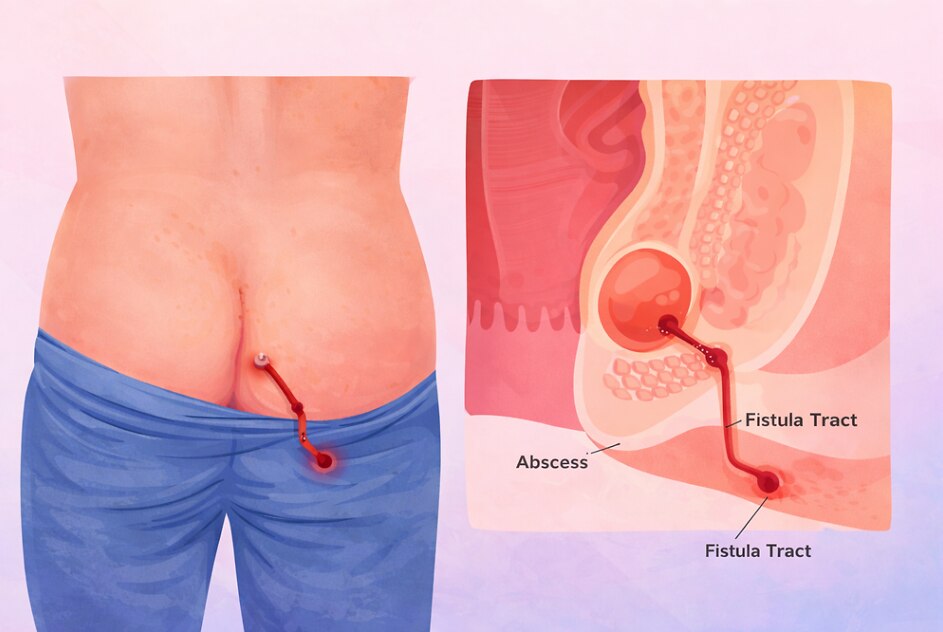
| Constant pain, pus, fever or spreading redness | Possible perianal abscess | Obtain urgent medical care |
| Dizziness or black, tarry stools | Significant blood loss or bleeding higher in the digestive tract | Seek urgent care |
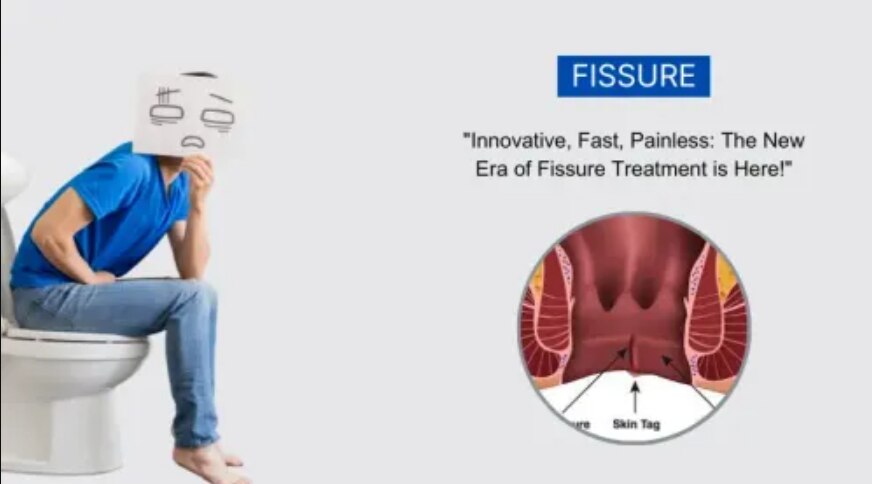
Rectal bleeding is not automatically piles. Anal fissure, fistula, inflammatory bowel disease, polyps, colorectal cancer and anaemia must be considered; a clinician may recommend blood tests, anoscopy or colon evaluation according to your age, bleeding pattern and risk factors.
The answer to who may need laser piles for surgery in Mumbai Central is people with confirmed, troublesome haemorrhoids—usually selected symptomatic internal piles with persistent bleeding or prolapse despite bowel-habit measures or office treatment. Laser is not a default treatment for every anal lump or episode of bleeding.
Confirm whether the problem is internal or external, and obtain an examination before choosing it.
How haemorrhoid grades determine the treatment choice
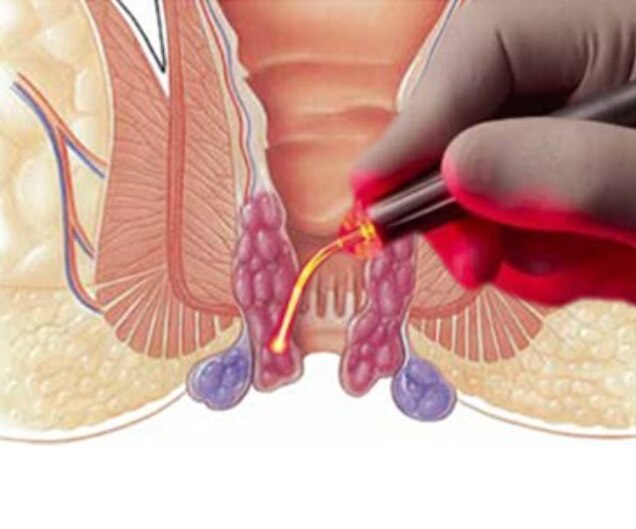
Grade and location determine treatment more reliably than the word “laser.” Internal haemorrhoids arise above the dentate line; external haemorrhoids arise below it, so external disease and internal prolapse require different approaches.
Internal grades are classified by how far tissue descends and whether it returns:
| Grade | Defining feature | Common treatment direction |
|---|---|---|
| I | Bleeding without prolapse | Fibre, fluids, stool-softening measures, prescribed medicines; injection treatment or rubber-band ligation for persistent symptoms |
| II | Prolapses with straining but returns on its own | Conservative care, rubber-band ligation, or injection treatment; selected persistent cases may suit laser haemorrhoidoplasty |
| III | Prolapses and needs manual replacement | Rubber-band ligation in selected cases; laser may suit selected internal disease, while advanced prolapse may favour excision |
| IV | Remains prolapsed and cannot be reduced | Excisional surgery or another approach is often more suitable than tissue-preserving laser treatment |
Rubber-band ligation is a standard office option for symptomatic grade I and II internal piles and selected grade III cases, but it does not treat every external haemorrhoid or irreducible prolapse. Large external components, mixed internal-and-external disease, substantial skin tags, and advanced grade III or IV prolapse may favour excisional surgery.
Grade alone never decides suitability. Persistent symptoms, anatomy, prior treatment response and the exact laser technique must be assessed together.
What should you try before considering a laser procedure?
Mild or moderate symptoms usually deserve conservative treatment before elective laser surgery. Improve stool consistency, reduce irritation and give the haemorrhoidal tissue time to settle.
1. Add fibre through vegetables, fruit, pulses and whole grains, or use a fibre supplement recommended by a clinician. Drink adequate fluids unless another medical condition limits your intake. Avoid straining and do not remain seated on the toilet for prolonged periods.
2. Treat the bowel problem causing repeated irritation. Constipation needs appropriate stool-softening measures; diarrhoea needs assessment and treatment rather than repeated wiping and irritation. A clinician may prescribe short-term topical or oral medicine for pain, itching, swelling or bleeding.
3. Reassess if symptoms continue or return. Many grade I and grade II internal haemorrhoids improve with bowel-habit changes or an office procedure such as rubber-band ligation. One episode of bleeding or prolapse does not automatically justify surgery.
Pregnancy, recent childbirth, active inflammatory bowel disease, uncontrolled bowel symptoms and major anaesthetic risk can change the timing. Anticoagulants and antiplatelet drugs also affect planning; never stop them without instructions from the prescribing doctor. If you are comparing piles treatment central in mumbai, ask whether these issues should be addressed before booking a procedure.
How is laser suitability confirmed before treatment?
Before treatment, the clinician confirms that bleeding and prolapse come from haemorrhoids rather than another anal or colonic condition. The consultation records:
- Bleeding colour, frequency and amount
- Prolapse and whether tissue returns on its own or needs manual replacement
- Pain, swelling, discharge and bowel habits
- Previous medicines, office procedures and surgery
- Anticoagulants, antiplatelet drugs and other relevant medicines
Examination includes inspection of the anal margin and a digital rectal examination. When indicated, anoscopy lets the clinician view the anal canal and internal haemorrhoids directly.
Laser piles surgery central in Mumbai is not one standard operation. The proposed laser technique, internal or external location, amount of prolapse and surgeon’s assessment determine whether tissue-preserving treatment is reasonable.
Finding haemorrhoids does not rule out a colonic cause of bleeding. Colonoscopy or another colon evaluation depends on your age, bleeding pattern, family history, anaemia, screening status and other risk factors.
| Finding | Meaning | Likely decision |
|---|---|---|
| Selected grade II or III internal prolapse | Possible laser haemorrhoidoplasty candidate | Compare laser with office treatment |
| Large external component or mixed disease | Laser may not address all tissue | Consider another intervention |
| Suspected cancer, fissure or fistula | Piles may be the wrong diagnosis | Investigate and treat the underlying condition |
| Abscess, strangulation or uncontrolled bleeding | Elective treatment is unsafe | Seek prompt assessment first |
How does laser compare with other piles procedures?
Non-operative care avoids anaesthesia and wounds, but it demands consistent fibre, fluid and bowel-habit changes. It may not control persistent prolapse. Rubber-band ligation treats suitable internal piles in an office, with limited downtime, but not every external haemorrhoid or irreducible prolapse; repeat treatment may be needed.
| Option | Main advantage | Limitation or suitable use |
|---|---|---|
| Non-operative care | No anaesthesia or wound | May not control persistent prolapse |
| Rubber-band ligation | Office treatment with limited downtime | Suitable for selected internal piles, not every external haemorrhoid or irreducible prolapse |
| Stapled haemorrhoidopexy | Addresses selected internal prolapse | Does not remove large external or mixed disease |
| Excisional haemorrhoidectomy | Removes haemorrhoidal tissue | Better for large external or mixed disease and advanced prolapse; more pain and wound care |
| Laser treatment | Less early pain and quicker initial recovery for selected internal haemorrhoids | Can cause bleeding, urinary retention, infection, pain and recurrence |
Laser is not one standard operation. Different devices and techniques make long-term comparisons difficult, so faster early recovery does not prove lower recurrence or suitability for advanced grade III or IV prolapse. Large external components, mixed disease and substantial skin tags may favour excision.
Before choosing piles surgery central in Mumbai, ask about recurrence, anaesthesia, wound care, follow-up and the possibility of later treatment. “Minimally invasive” describes access, not a guarantee of safety or a permanent result.
What should you ask a Mumbai Central surgeon before deciding?
Ask the surgeon to turn your symptoms and examination into a documented decision, not simply a laser booking. Use this checklist:
1. What is the haemorrhoid grade, and is the disease internal, external or mixed? Ask why laser is preferred and what finding would make rubber-band ligation, stapled haemorrhoidopexy or excision safer.
2. What exact laser technique is planned? Confirm the anaesthesia, expected pain, activity restrictions, wound-care instructions, follow-up schedule, recurrence risk and the complications requiring urgent help, such as heavy bleeding, fever, worsening pain or difficulty urinating.
3. Does your bleeding require anoscopy, colonoscopy or blood tests for anaemia? A visible haemorrhoid does not automatically explain every episode of rectal bleeding.
4. What bowel-management plan will protect the result? Ask about fibre, fluids, constipation, diarrhoea, toilet habits and medicines that increase bleeding, including anticoagulants and antiplatelet drugs. Do not stop prescribed medicines without instructions from the prescribing doctor.
5. What happens if symptoms return? Ask whether repeat treatment or another operation could be needed.
A consultation with Dr.VinayKumar Thati-Laser & Laparoscopic Surgeon can help connect symptoms, examination findings and options. For anyone comparing piles surgery central in Mumbai or piles treatment central in Mumbai, location matters less than a confirmed diagnosis, suitable haemorrhoid pattern and clear follow-up plan.
Related service
LASER SURGERY Piles What is Laser Piles Surgery? The methodology is classified as a surgical method that uses a laser beam to cure haemorrhoids. |
Frequently asked questions
Which symptoms mean you should be assessed for piles surgery?
Repeated bright-red bleeding, prolapse, tissue needing manual replacement, persistent discomfort, an irreducible lump, discharge, fever, dizziness, or black stools need medical assessment.
How do haemorrhoid grades determine the treatment choice?
Grade I haemorrhoids remain inside the anus, Grade II prolapse during bowel movements but return spontaneously, Grade III need manual replacement, and Grade IV remain prolapsed. Symptoms and examination findings determine whether lifestyle measures, office treatment, or surgery is appropriate.
What should you try before considering a laser procedure?
Increase dietary fibre, drink enough fluids, avoid straining, respond promptly to bowel urges, and use prescribed medicines or office treatments when appropriate.
How is laser suitability confirmed before treatment?
A surgeon reviews your bleeding and bowel symptoms, examines the anus and rectum, confirms the haemorrhoid grade, and checks for other causes of bleeding before discussing treatment.
How does laser compare with other piles procedures?
Laser treatment must be compared with rubber-band ligation, injection treatment, haemorrhoidectomy, and stapled procedures by considering haemorrhoid grade, recurrence risk, pain, recovery time, and suitability.
Keywords