A symptom-free gallstone found incidentally is not managed like repeated right-upper-abdominal pain, jaundice or pancreatitis. You will be able to distinguish safe follow-up from dangerous delay, understand the tests and treatment choices, and compare care in Malad with care elsewhere in Mumbai using clinical capability rather than distance alone.
Key takeaways
- Seek urgent care for severe pain, fever, jaundice or repeated vomiting.
- Use ultrasound and liver tests to assess stones and complications.
- Silent gallstones often need monitoring rather than preventive surgery.
- Compare local follow-up, total travel burden and emergency access before choosing care.
When delaying consultation becomes unsafe
A gallstone found incidentally in a symptom-free gallbladder is different from symptomatic or complicated disease. Such a stone often needs advice about warning symptoms and clinician-directed follow-up, not preventive surgery.
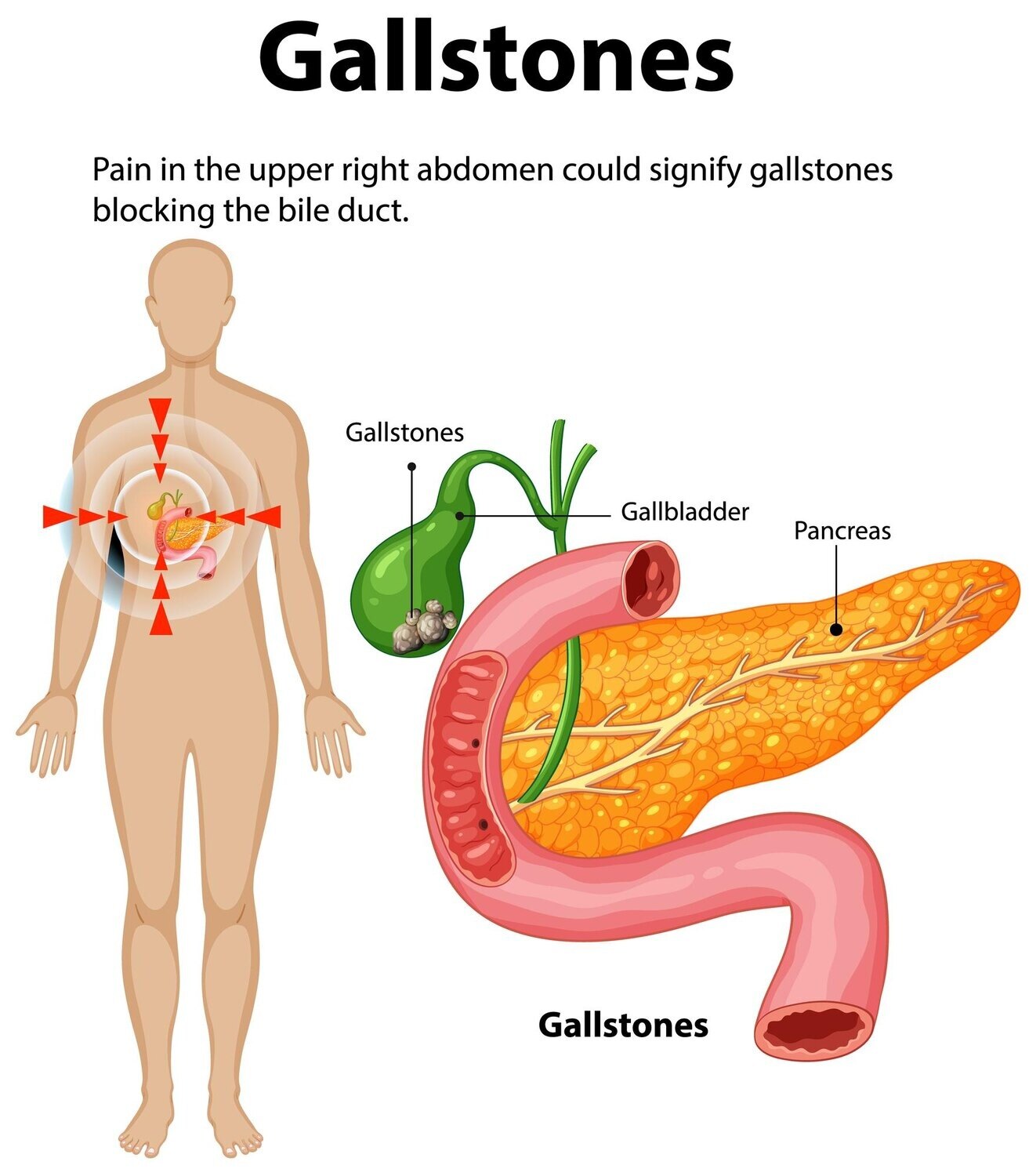
Biliary colic is steady pain in the right-upper abdomen or upper-middle abdomen lasting at least 30 minutes and sometimes several hours. Brief indigestion alone does not prove that gallstones caused it, and surgery may not relieve symptoms with another diagnosis.
Waiting is not planned observation when typical pain or complications are present. Another attack can occur, followed by acute cholecystitis, empyema, perforation, obstructive jaundice, pancreatitis, cholangitis or an emergency admission; untreated stones do not inevitably progress.
Seek same-day emergency assessment for:
- Severe, persistent or worsening right-upper-abdominal pain
- Fever or chills
- Repeated vomiting or inability to keep fluids down
- Jaundice, dark urine or pale stools
- Confusion
A gallbladder stone for surgery Malad comparison should weigh prompt assessment against the risk of an unplanned admission, not just clinic distance. Similarly, comparing gallbladder treatment Malad with delaying consultation is reasonable only when the stone is genuinely symptom-free.
| Situation | What it means | Appropriate next step |
|---|---|---|
| Incidental, symptom-free stone | No typical attack or complication | Planned medical advice and observation |
| Recurrent biliary pain | Symptomatic gallstones | Prompt surgical consultation |
| Red flags or duct obstruction | Possible infection, pancreatitis or blocked bile flow | Same-day emergency assessment |
How evaluation determines whether surgery is needed
The consultation starts with your symptom history: where the pain occurs, how long it lasts, whether it follows meals, and whether fever, vomiting or jaundice occurred. The clinician examines your abdomen for tenderness, guarding and signs of inflammation.
- Arrange a hepatobiliary ultrasound to look for gallstones, gallbladder-wall thickening, fluid and bile-duct dilation.
- Check liver-function tests, including bilirubin, AST, ALT, ALP and GGT. Request amylase or lipase when the pain pattern or blood results suggest pancreatitis.
- Investigate a suspected common bile duct stone with magnetic resonance cholangiopancreatography or endoscopic ultrasound when ultrasound or blood tests leave that question open.
- Use ERCP mainly to remove a duct stone or relieve obstruction, not as routine diagnostic testing when MRCP or endoscopic ultrasound can provide the answer.
An incidental stone in a symptom-free gallbladder often needs advice about warning symptoms and follow-up rather than preventive surgery. Repeated biliary pain, acute cholecystitis, gallstone pancreatitis, cholangitis after bile-duct treatment or another documented complication commonly leads to discussion of planned laparoscopic cholecystectomy.
Acute cholecystitis is usually considered for early surgery, often within one week when you are fit for it.
For anyone comparing gallbladder stone surgery in Malad, the decision depends on findings, not location. Ask whether laparoscopic cholecystectomy in Malad is elective or urgent and whether suspected duct stones have been excluded or treated.
Comparing surgery, observation and bile-duct treatment
Planned laparoscopic cholecystectomy offers definitive treatment for symptomatic gallbladder stones: it removes the gallbladder, so new stones cannot form there. Continued observation leaves the gallbladder in place and leaves open the possibility of another attack. Removing stones alone does not solve that problem; stones can recur.
| Option | What it means | When it applies |
|---|---|---|
| Observation | Keep the gallbladder and monitor symptoms | A genuinely symptom-free incidental stone |
| Laparoscopic cholecystectomy | Remove the gallbladder through small incisions | Recurrent biliary pain or a documented complication |
| Open cholecystectomy | Remove the gallbladder through a larger incision | Inflammation, scarring or difficult anatomy makes keyhole surgery unsafe |
| ERCP or other duct clearance | Remove a common bile duct stone or relieve obstruction | Before or around gallbladder removal when a duct stone is present |
For a gallbladder stone for surgery Malad comparison, compare treatment capability rather than location alone. ERCP treats the duct problem; it does not usually replace removal of a symptomatic gallbladder.
Discuss these risks with the surgeon:
- Bleeding, infection, bile leak or a retained common bile duct stone
- Bile-duct injury or injury to a nearby organ
- Blood clots and anaesthetic complications
- Conversion from laparoscopic to open surgery
Conversion is a safety decision when continuing keyhole surgery could cause harm, not necessarily a failed operation. A gallbladder stone surgery Malad consultation should explain when conversion might be needed and how duct stones will be managed.
What laparoscopic cholecystectomy and recovery involve
Laparoscopic cholecystectomy uses general anaesthesia and several small abdominal incisions to remove the gallbladder, not merely extract its stones. You may go home the same day or stay overnight; if inflammation, scarring or unclear anatomy makes keyhole surgery unsafe, conversion to open surgery protects you and is not necessarily a failed operation.
Before surgery, review every medicine, including blood thinners, supplements and diabetes treatment. Follow the anaesthesia team’s exact fasting instructions, make a pregnancy status known where relevant, and arrange transport plus an adult to support you after discharge.
Control pain as prescribed, keep dressings and wounds clean and dry, walk regularly, and follow instructions about bathing. Do not drive while taking sedating pain medicine or until you can brake and turn comfortably; ask about expected time off work and lifting limits. Resume food gradually.
Bile still flows from the liver into the intestine, but some people develop loose stools or intolerance to fatty meals. A low-fat diet and pain medicines can reduce triggers or symptoms; they do not remove stones or reliably prevent complications.
For any gallbladder treatment Malad consultation, ask:
- Is surgery elective or urgent, and is the common bile duct clear?
- What happens if the anatomy is difficult?
- How long should I avoid work, driving and heavy lifting?
- What emergency plan applies if pain, fever, vomiting or jaundice returns?
Search terms such as laparoscopic cholecystectomy malad should lead to questions about capability, not only location.
How to compare gallbladder care in Malad with delaying or travelling elsewhere
Location is only useful if it gives you a complete care pathway. Use this checklist for a gallbladder stone for surgery Malad comparison:
- Confirm whether the clinic performs or coordinates hepatobiliary ultrasound.
- Ask who reviews bilirubin, AST, ALT, ALP and GGT, and what happens if results suggest a duct stone.
- Ask whether suspected common bile duct stones are assessed with MRCP or endoscopic ultrasound and cleared by ERCP when needed.
- Check the affiliated hospital, open-surgery backup, anaesthesia team, surgeon availability and after-hours emergency access.
- Calculate total travel time, including urgent transfers, and identify where postoperative reviews will occur.
| Option | Strength | Risk or question |
|---|---|---|
| Malad service | Convenient continuity from diagnosis through recovery | Confirm biliary, anaesthesia and emergency capability |
| Distant centre | May offer stronger duct, anaesthesia or intensive-care support | Longer travel and harder follow-up |
| Delaying consultation | Avoids immediate appointments for a symptom-free incidental stone | Recurrent pain can become cholecystitis, pancreatitis or obstruction |
Gallbladder treatment Malad is a sensible choice when the service can arrange tests, plan laparoscopic cholecystectomy, manage duct stones and respond if anatomy requires open surgery. Dr.VinayKumar Thati-Laser & Laparoscopic Surgeon is one local consultation option, but the name and locality do not prove that this full support exists.
Seek emergency assessment for severe or persistent pain, fever, vomiting, jaundice, dark urine, pale stools, confusion or inability to drink. Arrange a prompt non-emergency surgical consultation for recurrent typical pain. Follow clinician-directed observation for a genuinely symptom-free incidental stone.
Related service
LAPAROSCOPIC SURGERY What are gallstones? Gallstones form when bile stored in the gallbladder hardens into stone-like material. View service → |
Frequently asked questions
When does delaying a gallbladder consultation become unsafe?
Delaying becomes unsafe when gallstone symptoms include severe or persistent pain, fever, jaundice, repeated vomiting or signs of infection or obstruction.
How does evaluation determine whether gallbladder surgery is needed?
A clinician combines your symptoms with examination, abdominal ultrasound and blood tests such as liver-function tests to identify symptomatic stones, inflammation or bile-duct blockage.
How do surgery, observation and bile-duct treatment differ?
Observation suits selected symptom-free patients, laparoscopic cholecystectomy treats a gallbladder causing symptoms or complications, and endoscopic bile-duct treatment addresses stones lodged in the common bile duct.
What does laparoscopic cholecystectomy recovery involve?
The operation removes the gallbladder through small abdominal incisions; recovery planning includes wound care, activity guidance, pain control and instructions for recognising complications.
What should you compare when choosing gallbladder care in Malad?
Compare diagnostic access, surgeon and hospital arrangements, emergency support, follow-up convenience, total travel time and the disruption caused by travelling elsewhere.
Keywords