Pain that continues after a bowel movement, returns with each stool, or persists despite softer stools needs more than a quick choice of procedure. You will learn how to distinguish a chronic fissure from other causes of anal pain, what treatment to try first, and which questions to ask before consenting to laser surgery.
Key takeaways
- Pain after bowel movements can signal a chronic anal fissure.
- Confirm the fissure’s cause and rule out other conditions before surgery.
- Try fibre, fluids, and stool-softening treatment for the advised period.
- Ask about recovery, wound care, pain control, and follow-up before booking.
How to tell whether an anal fissure has become chronic
An acute anal fissure usually causes sharp or tearing pain as you pass stool, followed by burning or aching that lasts minutes to hours. Recurrent tearing, pain that continues after bowel movements, or symptoms that persist despite fibre, fluids, and stool-softening measures suggest the fissure is not healing.
Use this distinction:
- Acute fissure: symptoms have lasted less than about six weeks, with no chronic structural changes. The tear may heal when stools become soft and straining stops.
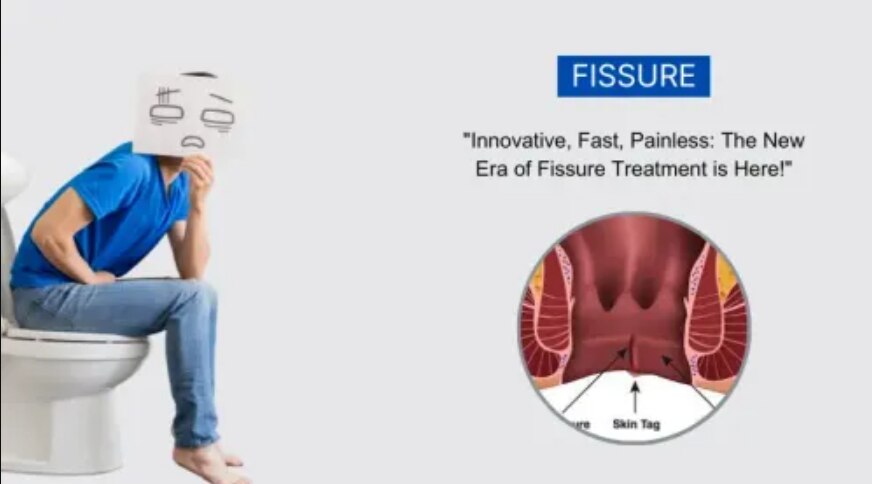
- Chronic fissure: symptoms continue for about six weeks or longer, or examination shows a sentinel skin tag, hypertrophied anal papilla, or exposed internal anal sphincter. These signs reflect repeated injury and scarring, even if pain varies from day to day.
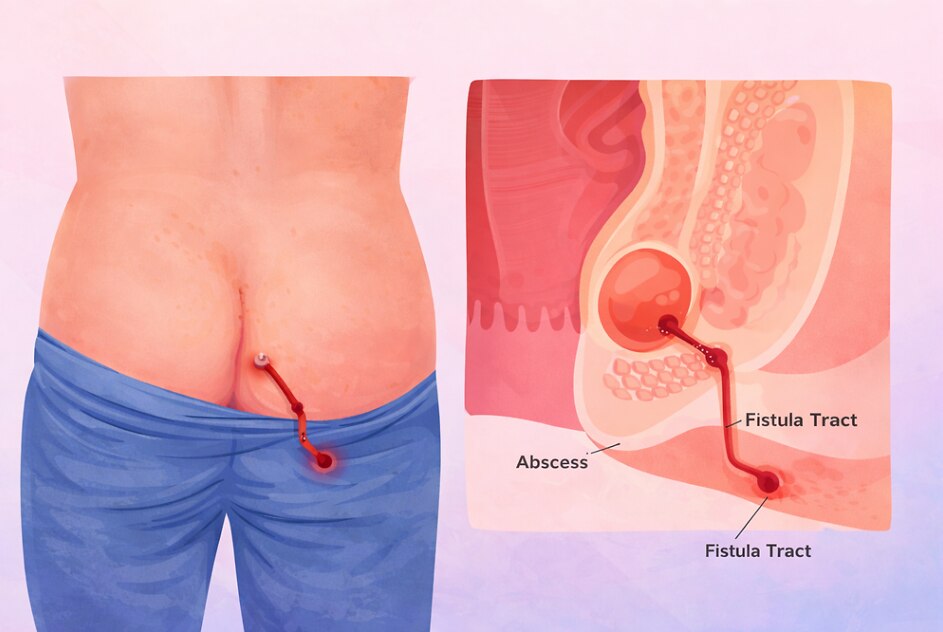
- Different diagnosis: constant or progressive pain, fever, swelling, pus, or pain unrelated to bowel movements needs assessment for an abscess, fistula, thrombosed haemorrhoid, infection, dermatitis, inflammatory bowel disease, or rarely anal or rectal disease.
A lateral fissure, multiple fissures, or a non-healing fissure is not an ordinary midline fissure until a clinician checks it. Crohn’s disease, infection, malignancy, and other systemic conditions can produce this pattern.
Confirm the cause before considering laser fissure surgery for ongoing pain in Bandra; laser treatment for the wrong diagnosis will not resolve the underlying problem.
What must be checked before choosing laser surgery
Laser treatment should follow a confirmed diagnosis, not ongoing pain alone. Typical fissure pain is sharp or tearing during a bowel movement, followed by burning or aching for minutes to hours. Constant, progressive pain or pain unrelated to bowel movements needs a broader assessment.
The surgeon will inspect the anus for a fissure, sentinel skin tag, swelling, discharge, skin changes, or a visible clot. A digital rectal examination is performed when pain allows. If the diagnosis remains uncertain, anoscopy or another examination may be needed; severe tenderness can require examination under anaesthesia.
| Finding | Possible cause | Why it matters |
|---|---|---|
| Midline fissure with typical pain | Anal fissure | Supports fissure-directed treatment |
| Lateral or multiple fissures | Crohn’s disease, infection, or other systemic disease | Needs investigation before treatment |
| Pus, opening, or swelling | Perianal abscess or fistula | Laser fissure treatment will not remove the underlying infection |
| Blue, tender lump | Thrombosed haemorrhoid | Requires a different treatment plan |
| Rash, weeping, or broken skin | Dermatitis or infection | Treat the skin or infection first |
| Persistent atypical lesion or bleeding | Rarely anal or rectal disease | May require imaging, biopsy, or specialist assessment |
Seek urgent assessment for fever, pus, rapidly increasing swelling, heavy bleeding, inability to pass stool or urine, or severe constant pain unrelated to bowel movements. These signs can indicate an abscess, infection, significant bleeding, obstruction, or another condition that laser fissure treatment will not address.
How long to try non-surgical fissure treatment
Most uncomplicated fissures deserve a properly followed non-surgical course before an operation. Keep stools soft with fibre from food or a supplement, adequate fluids, polyethylene glycol or another prescribed stool softener, and no straining. Warm sitz baths ease discomfort, while topical anaesthetic provides short-term symptom relief rather than healing the tear.
Prescription glyceryl trinitrate relaxes the internal anal sphincter and supports healing. Diltiazem and nifedipine serve a similar purpose; calcium-channel blockers are often preferred when nitroglycerin headaches are troublesome. Follow the prescribed course instead of judging failure after a few applications.
Track each bowel movement:
- Pain during passage and for how long afterward
- Bleeding, including whether it is decreasing
- Stool hardness, straining, and recurrent tearing
Return for review if temporary improvement is followed by recurring pain or bleeding. A search for “fissure treatment Bandra” should lead to a discussion of options, not an assumption that laser treatment is automatically necessary.
| Option | Main point | When to compare |
|---|---|---|
| Botulinum toxin | Relaxes the sphincter without cutting it; healing can be less durable and repeat treatment may be needed | When continence risk matters |
| Lateral internal sphincterotomy | Divides part of the internal sphincter and has an established healing record, with continence risk to assess | When medical treatment fails |
| Laser procedure | The method and evidence vary; ask for healing, recurrence, continence, follow-up, and comparator data | When considering fissure treatment after failed medical care |
What “laser fissure surgery” actually involves
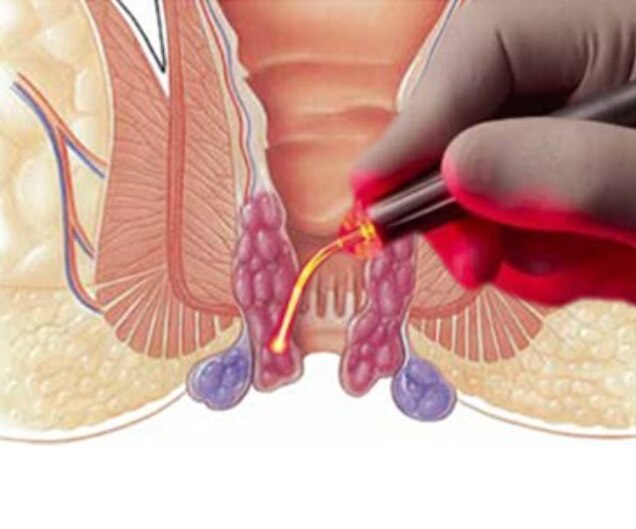
Laser fissure surgery is a label, not a single operation. A surgeon may perform laser fissurectomy, ablate the fissure, remove scar tissue or a sentinel pile, or use a laser-assisted sphincter procedure. Ask the key question plainly: will the internal anal sphincter be divided, cut, or otherwise injured?
Laser energy does not remove the continence risk created by sphincter damage.
Before consenting, ask:
- What exact laser method will you use, and what tissue will be removed?
- What anaesthesia, operating-room time, and recovery-room time should I expect?
- How will I clean and dress the wound, and what must happen before same-day discharge?
- What are your healing and recurrence rates, continence outcomes, follow-up duration, and comparator treatment?
“Minimally invasive” and “painless” are claims, not evidence. For laser fissure surgery bandra searches, compare procedure-specific results rather than the location-based label.
| Option | Main feature | Important trade-off |
|---|---|---|
| Laser fissurectomy or ablation | Treats fissure tissue, with or without scar tissue or sentinel pile removal | Outcome depends on technique; evidence is less established |
| Lateral internal sphincterotomy | Divides part of the internal sphincter; healing commonly exceeds 90% | Strong operative track record, but possible flatus or faecal incontinence |
| Botulinum toxin | Relaxes the sphincter without cutting it | Sphincter-sparing, but healing can be less durable and repeat treatment may be needed |
How to plan consultation, recovery, and follow-up in Bandra
Take a symptom timeline to your appointment: record pain during and after bowel movements, bleeding, tearing, stool consistency, and what has helped or failed. Add every cream, stool softener, prescription, procedure, and the dates you used them.
- Bring details of your bowel habits, including straining, frequency, diarrhoea, constipation, and time spent on the toilet.
- Describe any urgency, leakage, reduced control of gas, or accidental stool loss; continence history affects treatment choices.
- Ask Dr.VinayKumar Thati-Laser & Laparoscopic Surgeon to confirm the diagnosis, name the exact laser technique, and explain whether the internal anal sphincter will be divided or injured.
- Ask which alternatives fit your case and what happens if the fissure does not heal, recurs, or proves to have another cause.
Use the same questions when comparing an anal fissure surgeon Bandra with another local provider. The important comparison is the examination, proposed procedure, continence discussion, evidence, and follow-up plan—not the word “laser”.
Pain can continue while the surgical wound heals, so do not expect instant relief. Take prescribed analgesics, drink enough fluids, keep stools soft with the recommended fibre or stool-softening plan, avoid straining, and follow wound-care instructions.
Contact the surgical team promptly for heavy bleeding, fever, pus, increasing swelling, urinary retention, rapidly worsening pain, or inability to pass stool or gas. These signs can indicate infection, abscess, bleeding, or another complication rather than routine healing.
Related service
LASER SURGERY Fissure Minimally invasive: Laser anal fissure surgery is a minimally invasive procedure that results in less pain and discomfort compared to traditional... |
Frequently asked questions
How can you tell whether an anal fissure has become chronic?
A fissure is more concerning for chronic disease when pain or bleeding keeps recurring, pain continues after bowel movements, or the tear fails to heal despite fibre, fluids, and stool-softening measures. A clinician must confirm the diagnosis.
What should be checked before choosing laser fissure surgery?
A surgeon should examine the anal canal, confirm that the symptoms come from a fissure, assess sphincter muscle spasm, and check for conditions such as haemorrhoids, fistula, abscess, inflammatory bowel disease, or another cause of bleeding.
How long should you try non-surgical fissure treatment?
The appropriate trial depends on the fissure’s duration, severity, examination findings, and response to treatment. Ask the surgeon for a defined review date rather than continuing home treatment indefinitely.
What does laser fissure surgery involve?
The surgeon uses an instrument to treat the fissure and any associated scar tissue or sentinel skin tag, with the exact technique depending on the examination. Ask which procedure is planned, what anaesthesia it uses, and how it affects the anal sphincter.
How should you plan consultation, recovery, and follow-up in Bandra?
Bring a list of symptoms, medicines, prior treatments, bowel habits, and relevant medical conditions. Before treatment, confirm travel arrangements, expected time away from work, wound-care instructions, warning signs, emergency contact details, and the follow-up schedule.
Keywords